Who It Suits
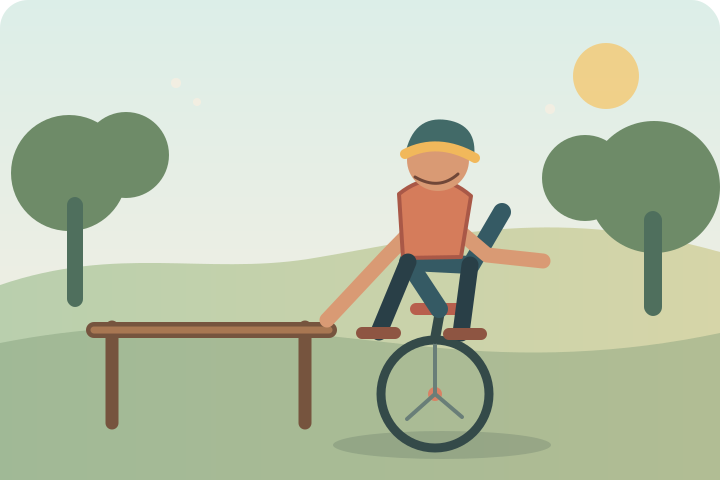
Unicycling means riding a single-wheeled, pedal-powered vehicle with no handlebars — balance and pedalling are the whole skill, and both are learned by doing. A beginner’s first sessions are spent beside a wall or rail: mounting, holding the pedals level, rocking the wheel, and eventually pedalling a few unsupported metres. The appeal is that progress shows up in small, concrete milestones — a controlled mount, ten metres, a turn, a clean dismount — and it is a low-impact way to build balance and leg strength. The constraints are real too: falls are part of learning, you need a flat, legal practice space, and a unicycle is not a practical way to commute until you are confident on it.
This page covers recreational unicycling. Competitive forms — racing, unihockey, unibasket, trials, mountain unicycling, and freestyle — have their own rules and pathways, coordinated internationally by the International Unicycle Federation (IUF) and locally by national associations and clubs.
Getting Started
Start with a unicycle that fits your legs. A 20-inch wheel (48B in the unicycling size system) is the common choice for learning and tricks; a 24-inch wheel (54B) suits relaxed riding, and 26-inch (56B) wheels are for distance touring. Set the saddle so your leg is almost straight when the lower pedal is at the bottom, and check that the pedals are grippy and the tyres durable. If you are unsure about size, ask a unicycle shop, club, or experienced rider — sizing help is usually free.
Try before you buy if you can: borrow a unicycle, use a club’s spare, or buy used. A sound used unicycle is economical if its frame, wheel, cranks, pedals, and seat post fit correctly and are in good condition. Practise beside a smooth wall, sturdy rail, or trusted helper on flat ground away from traffic.
Basic Gear
| Item | Essential starter | Optional later | Avoid at first |
|---|---|---|---|
| Unicycle | A correctly sized beginner unicycle — borrowed, used, or new. | A second wheel size, or a specialist trick or mountain unicycle. | A wheel that is clearly too big or too small for you. |
| Helmet | A properly fitted helmet, worn on every session. | Replacing it after a hard impact. | A helmet that is loose or never worn. |
| Wrist protection | Wrist guards or cycling gloves — falls are frequent while learning. | Replacing pads after wear. | Bare wrists on rough ground. |
| Leg protection | Knee and shin guards for the first weeks. | Replacing pads after wear. | — |
| Shoes | Flat, closed-toe shoes with grippy soles. | Stiffer-soled shoes for distance riding. | Sandals or flip-flops on the pedals. |
| Pump and tools | A pump with a gauge, and a basic spanner or pedal wrench. | A multitool, spare tube, tyre levers. | A pump that does not reach your valve type. |
| Water | A bottle for sessions over about 30 minutes. | — | — |
Key Terms
A small vocabulary covers most of what you will meet in clubs, shops, and online:
| Term | Plain-English meaning |
|---|---|
| Mount | Getting on the unicycle — the first skill to learn, usually with a wall or rail. |
| Dismount | Getting off cleanly, usually by stepping off to the side. |
| B size | The wheel-size system used in unicycling: 48B is a 20-inch wheel, 54B is 24-inch, 56B is 26-inch. |
| Crank | The arm that holds the pedal. Crank length affects pedalling comfort and clearance for tricks. |
| Freewheel | The hub mechanism that lets the wheel keep spinning after you stop pedalling. |
| Spotter | A helper who stands nearby and steadies you while you learn. |
| Unihockey | Unicycle hockey — a team game played on unicycles with sticks and a ball. |
| Unibasket | Unicycle basketball, played on unicycles around a hoop. |
| MUni | Mountain unicycling, on rough trails with wide tyres and stronger frames. |
| Trials | Riding over and across obstacles without putting a foot down. |
| Flatland | Smooth freestyle tricks performed on flat ground. |
| Unicon | A long-distance unicycle event, often 100 km or more. |
First Session
Keep the first session short — 20 to 30 minutes is plenty. A simple plan:
- Set the saddle so your leg is almost straight when the lower pedal is at the bottom, and check that the pedals and seat post are secure.
- Mount with the wall or rail: hold it, step up, and sit with most of your weight on the saddle.
- Hold the pedals level and rock the wheel gently, stepping off forward and backward.
- Make a few supported pedal strokes, looking ahead instead of down, with your shoulders relaxed.
- Practise deliberate dismounts, and stop before tired legs make your movements hurried.
First Month
Aim for several short sessions each week rather than one exhausting practice. A realistic sequence:
- Weeks 1–2: a controlled mount, looking ahead instead of down, and riding a few metres between two support points.
- Weeks 3–4: longer unsupported rides, gentle turns, deliberate dismounts, and free mounting (without the wall).
- Then: one new variable at a time — a little more speed, a new surface, a longer distance, or a club session.
Record distance or pedal revolutions so gradual progress is easier to notice.
Costs
Unicycling has a moderate setup cost. Typical starter ranges (they vary a lot by country, region, and year):
| Item | Typical range |
|---|---|
| Used beginner unicycle | $100–$300 / £100–£250 |
| New beginner unicycle (20-inch) | $200–$500 / £200–£400 |
| Helmet | $30–$100 / £30–£80 |
| Wrist, knee, and shin guards | $30–$80 / £30–£70 |
| Pump and basic tools | $20–$50 / £20–£40 |
Ongoing costs are modest: tyres, pedals, and chains wear over time. Costs rise with specialist trick or mountain unicycles, larger distance wheels, lights, and travel to clubs or events. Lower-cost routes exist: borrowing a unicycle, club spares, and the used market all let you try the hobby before committing.
Space Needed
Learning needs a flat, smooth, legal area with a long wall or rail and plenty of clear fall space. An empty sports court, quiet playground edge, wide path, indoor hall, or traffic-free car park can work with permission. Avoid slopes, loose gravel, wet surfaces, crowded paths, low obstacles, and roads until mounting, steering, and stopping are reliable.
Where a unicycle may be ridden depends on local rules: in many places a unicycle is not legally classified as a bicycle, so path, trail, and road rules can differ from cycling. Check the rules where you ride before you rely on a route.
Solo or Social
Unicycling can be practised alone once you can mount and dismount safely, but early sessions are often easier with a calm helper or club. Other riders can help with setup, posture, drills, and encouragement. Clubs may also offer group rides, unicycle hockey or basketball, workshops, performances, and access to different wheel sizes. In the UK, Unicycling UK runs a club directory and a levels scheme; elsewhere, national associations and local clubs are the usual entry points.
Common Mistakes
- Setting the saddle too low, which makes smooth pedalling harder.
- Standing heavily on the pedals instead of sitting into the saddle.
- Looking at the wheel rather than toward the route ahead.
- Pulling along a rail with both hands and twisting the upper body.
- Learning on a slope, rough surface, or busy path.
- Chasing distance after fatigue has reduced control.
- Buying a wheel size meant for distance or tricks before you can ride comfortably.
Safety / Accessibility
Falls, wrist impacts, bruised shins, twisted ankles, collisions, and saddle discomfort are the main concerns. Wear a helmet and suitable guards, keep early speeds low, remove trip hazards, check that the seat and pedals are secure, and learn to step away from the unicycle rather than trying to save every failed attempt.
- For children, the unicycle must be the right size — smaller wheels and shorter cranks — and young riders need supervision and a clear, soft practice space.
- In many places a unicycle is not legally classified as a bicycle, so where you may ride can differ from cycling; check local rules.
- A rail on both sides, a spotter, frequent seated breaks, shorter cranks, or specialist coaching can make practice more manageable.
- People with joint, balance, vision, or neurological conditions may benefit from advice from a qualified clinician and an adaptive cycling programme before starting.
Where It Can Go
Unicycling can stay a casual habit or become a long-term sport. The main changes are the wheel, the surface, and how much structure you add.
| Path | What changes | Notes |
|---|---|---|
| Casual riding | Longer, smoother rides; a second wheel size for comfort. | The most common end point. |
| Freestyle and flatland | Tricks on flat ground; grippy tyres and dedicated practice space. | Progress is slow and very visible. |
| Trials | Obstacles; a low, sturdy unicycle. | Foot-down rules vary by event. |
| Mountain unicycling (MUni) | Wide tyres, stronger frames, trail skills. | Start on easy, dry trails. |
| Distance and touring | 24- or 26-inch wheels, lights, and panniers. | Unicons are the long-distance events. |
| Unihockey | Sticks, ball, a team, and a court or rink. | The most social competitive form. |
| Unibasket | A hoop, a team, and a court. | Often run through clubs. |
| Racing | Federation entry, race rules, and structured training. | The IUF coordinates international competition. |
| Circus and performance | Routines, juggling, and shows. | Circus schools are a good entry point. |
| Coaching | Teaching others; club experience first. | Clubs are the usual training ground. |
References
Last reviewed: 18 August 2026.
Editorial note: This page is written as beginner discovery guidance, not as a maintained product ranking. Prices are typical starter ranges and vary by country, region, and year; check local shops for current costs. Where a unicycle may be ridden — paths, trails, roads — depends on local rules, which vary by place, so check before relying on a route.
Official and institutional sources:
- Unicycling UK — the UK national body for unicycling; runs a club directory, a levels scheme, and a skills challenge.
Community resources (optional):
- Local unicycle clubs and national associations for lessons, group rides, and unihockey or unibasket teams.
- Unicycle shops for sizing, setup, and checked used unicycles.
- Circus schools for freestyle and performance routes.
Related Hobbies
Cycling, juggling, slacklining, skateboarding, roller skating, mountain biking, yoga, dance, and parkour all sit nearby.